
Bedroom Condensation Causes & Fixes
Of all the rooms in a house, bedrooms are the ones I get called about most. Streaming windows in the morning, damp patches on walls, that stale heavy feeling when you open the door after a night’s sleep.
It is the same story in homes right across New Zealand, and it is one of the most predictable moisture patterns I see.
Having spent over a decade working across ventilation, heat pumps, and energy efficiency in NZ and overseas, I can say confidently that bedroom condensation is rarely mysterious.
The causes are straightforward once you understand what happens in a closed room overnight, and the fixes are practical, affordable, and well within reach for most households.
Quick Summary
- Bedrooms get more condensation than other rooms because doors stay closed and moisture from breathing builds up overnight
- Two adults sleeping in a closed room can add over a litre of moisture to the air in eight hours
- Single-glazed windows and aluminium frames are the first surfaces where condensation appears because they cool down fastest
- Furniture placed against exterior walls traps moisture and creates hidden damp spots
- Keeping air moving through the bedroom, even slightly, makes a significant difference to overnight moisture levels
- Consistent low-level heating reduces cold surfaces where condensation forms
- Most bedroom condensation can be reduced without major renovations or expensive equipment
Why Bedrooms Are the Worst Room for Condensation
When you sleep, you breathe out warm, moist air all night. In a bedroom with the door closed and no ventilation, that moisture has nowhere to go. It builds up steadily in the air until the humidity reaches a point where it starts condensing on the coldest surfaces in the room.
Two adults sleeping for eight hours will add roughly 1 to 1.5 litres of moisture to a bedroom, just from breathing. Add a child in the room, and the number climbs higher.
That moisture sits in the air until it hits something cold, usually the windows first, then exterior walls, and eventually corners and ceiling edges where airflow is weakest.
This is why bedroom condensation follows such a consistent pattern across condensation in NZ homes generally. Morning is always the worst time, winter is always the worst season, and the rooms with the least airflow always cop it hardest.
The Overnight Moisture Cycle
What makes bedrooms different from the rest of the house is timing. Most of the moisture is produced during the hours when the room is sealed and the house is at its coldest.
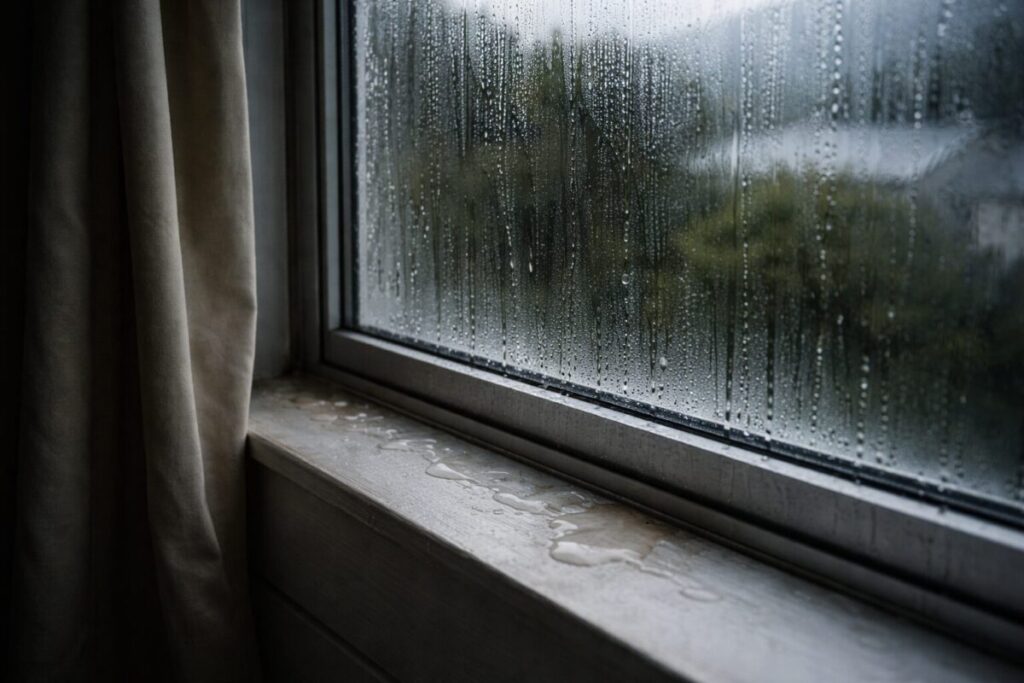
The temperature outside drops through the night, window glass and exterior walls cool down, and the warm humid air inside the bedroom meets those cold surfaces and releases its moisture as water.
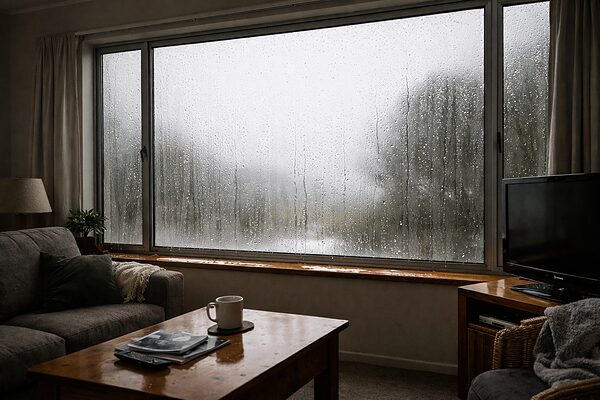
By early morning, you have got the peak combination of maximum humidity and minimum surface temperature. That is why you walk in at 7 am, and the windows are steaming.
By midday, the room has warmed, the air can hold more moisture again, and the windows look fine, but the underlying issue has not changed.
The problem tends to get noticeably worse during condensation in winter because the temperature gap between indoor air and outdoor surfaces widens, and homes are sealed up tighter to keep the warmth in.
Common Bedroom Setups That Make It Worse
Some bedroom layouts and habits create conditions that almost guarantee heavy condensation. These are the ones I see over and over again in NZ homes.
Closed Doors With No Air Path
A fully closed bedroom door with no gap underneath and no window trickle vent creates a sealed box. The moisture from breathing accumulates with no dilution from drier air in the rest of the house. Even a small gap under the door or a window cracked a few millimetres can make a measurable difference.
Furniture Against Exterior Walls
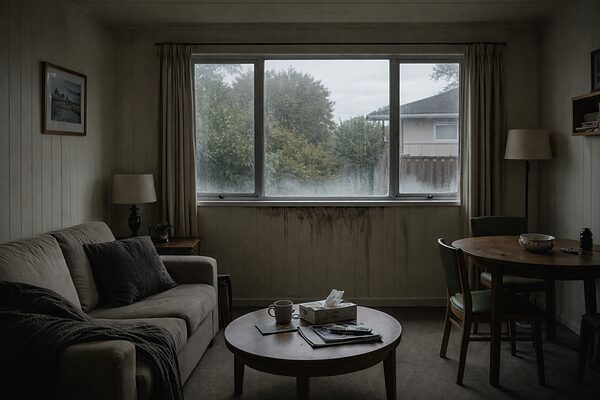
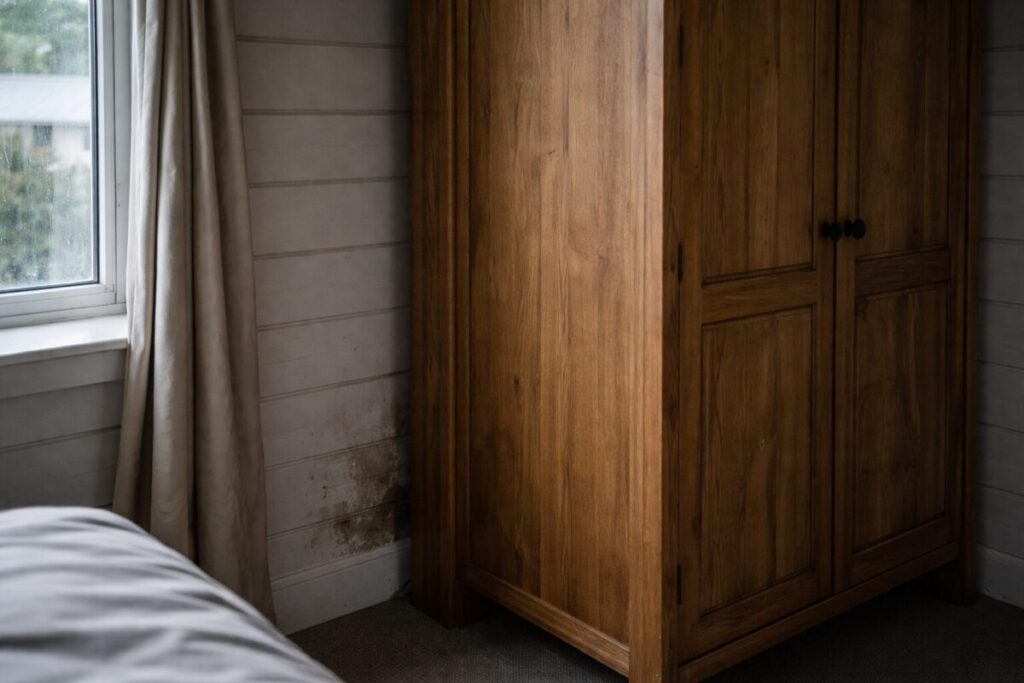
Wardrobes, headboards, and dressers pushed hard against an exterior wall block airflow and trap moisture between the furniture and the cold wall surface. Over time this creates a hidden damp zone that often goes unnoticed until you move the furniture and find mould growing behind it. Leaving even a 50mm gap allows air to circulate and reduces the risk significantly.
Heavy Curtains Trapping Window Moisture
Thick curtains are great for warmth, but when they sit tight against a window, they create a pocket of still, cold air between the fabric and the glass. That pocket is where condensation concentrates, and because the curtains block the room’s warmth from reaching the glass, the window surface stays even colder than it would otherwise.
Single Glazing and Aluminum Frames
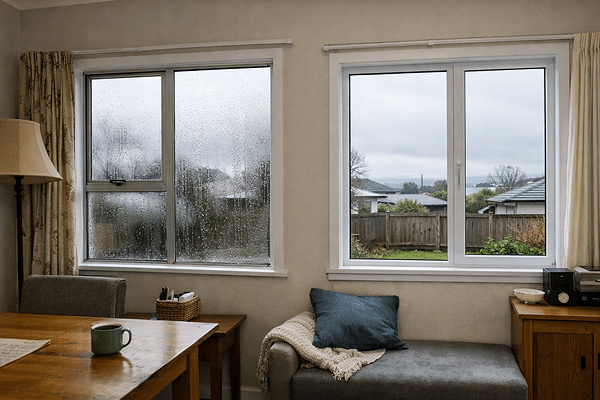
Most older NZ homes still have single-glazed aluminum windows, and these are the number one condensation magnet. The metal frame conducts cold straight through, and single glass offers almost no thermal barrier. Even homes with window condensation on double glazing can still see moisture on the frames, but the difference compared to single glazing is substantial.
How to Tell If It Is Condensation or Something Else
Not every damp bedroom wall is condensation. Before making changes, it is worth confirming that condensation is actually what you are dealing with. The simplest test is timing and pattern.
| What You See | Likely Cause | Key Clue |
|---|---|---|
| Wet windows in the morning that dry by midday | Condensation | Follows a daily cycle, worst in winter |
| Persistent damp on lower walls, year-round | Rising damp | Does not change with season or time of day |
| Stain that appears or grows after rainfall | Leak | Linked to weather, localised to one area |
| Musty smell even when surfaces look dry | Trapped moisture | Often behind furniture or in poorly ventilated corners |
A lot of people confuse condensation with actual dampness or leaks, but the fix for each is completely different, so getting the diagnosis right saves both time and money.
Practical Fixes That Actually Work
The good news with bedroom condensation is that the fixes are practical and most of them cost very little. It comes down to three things: reducing the moisture going into the air, keeping surfaces warmer, and getting air moving.
Improve Airflow
This is the single biggest lever. Even a small amount of air exchange overnight dramatically reduces the moisture that accumulates.
Leave the bedroom door slightly ajar, open a window a crack if weather allows, or look at a whole-house ventilation system that moves filtered air through every room continuously.
Positive pressure systems work particularly well for this because they push drier air into bedrooms even when doors are mostly closed.
Keep Surfaces Warmer
Condensation needs a cold surface. If you can keep walls and windows slightly warmer overnight, you reduce the conditions for moisture to settle.
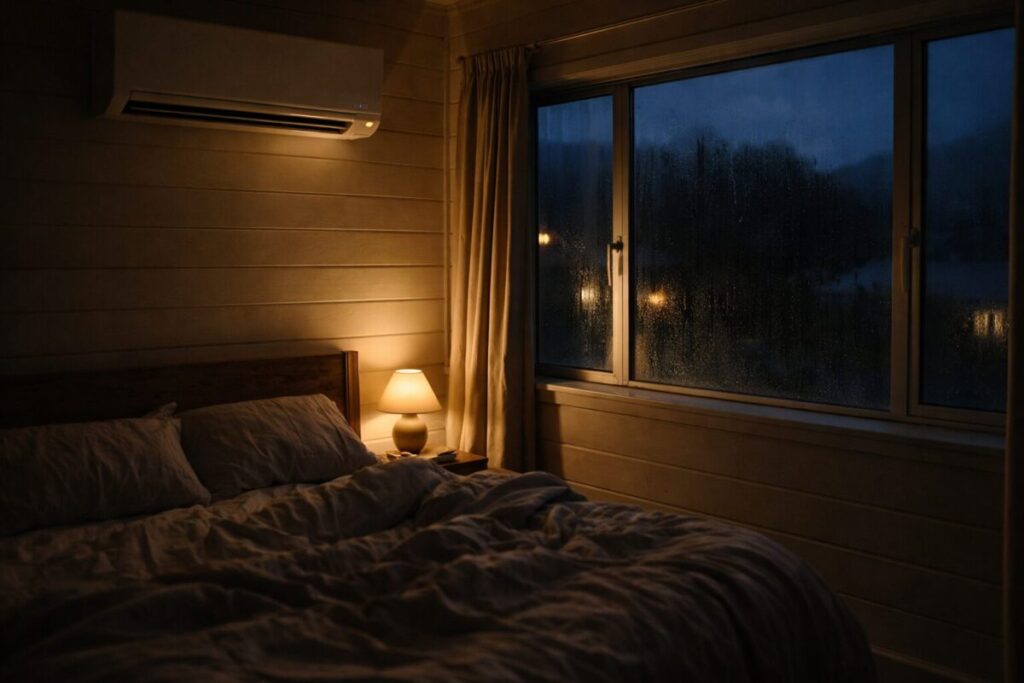
A heat pump running at a low, consistent temperature through the evening and into the night is far more effective than heating hard for an hour and then switching off.
The goal is not to make the room hot, just to prevent surfaces from dropping to the point where moisture condenses.
Reduce Moisture at the Source
Some of this is about bedroom habits, and some is about what happens in the rest of the house. Avoid drying clothes in or near bedrooms, keep bathroom doors closed during and after showers so steam does not migrate down the hallway, and pull furniture away from exterior walls to let air circulate. Small changes, but they add up.
Frequently Asked Questions
Is bedroom condensation normal in New Zealand?
It is extremely common, especially in winter and in homes with single glazing. Common does not mean unavoidable though. Most bedrooms can be improved significantly with better airflow and consistent heating habits.
Will leaving the bedroom door open fix it?
It helps, sometimes a lot. An open or slightly ajar door allows air to circulate between the bedroom and the rest of the house, which dilutes the moisture that builds up overnight. It is one of the simplest and most effective changes you can make.
Should I use a dehumidifier in my bedroom?
A dehumidifier can help manage symptoms, but it does not address the root cause, which is usually a lack of ventilation. It works best as a supplement to proper airflow, not a replacement for it.
Does double glazing stop bedroom condensation?
Double glazing reduces condensation on the glass itself because the inner pane stays warmer. It will not eliminate condensation entirely if indoor humidity is high, but it makes a noticeable difference, especially compared to single-glazed aluminium frames.