Condensation vs Damp vs Leaks Explained
One of the most common mistakes I see homeowners make is treating all moisture the same. You notice a damp wall, a bit of mould in the corner, or water sitting on the windowsill, and the assumption is usually “the house is damp” or “there must be a leak somewhere.”
But condensation, rising damp, and water ingress are three completely different problems, and the fix for each one is completely different too.
I have been into hundreds of New Zealand homes where someone has spent money fixing the wrong thing because they misidentified the source. A dehumidifier for a leak, waterproofing paint over a condensation issue, and new spouting when the real problem was indoor humidity. Getting the diagnosis right is the first step, and it is not that hard once you know what to look for.
Quick Summary
- Condensation is the most common moisture problem in NZ homes, caused by warm, humid air meeting cold surfaces
- Rising damp shows as a constant tide mark on lower walls, usually in older homes without a damp-proof course
- Leaks are localised, irregular, and get worse during or after rainfall
- Condensation is worst in the morning and in winter, while rising damp stays constant year-round
- Misdiagnosing the source leads to wasted money on fixes that do not solve the real problem
- Some homes have more than one issue at the same time, making an accurate diagnosis even more important
- The most affordable first step is improving ventilation and reducing indoor moisture production
What Condensation Looks Like
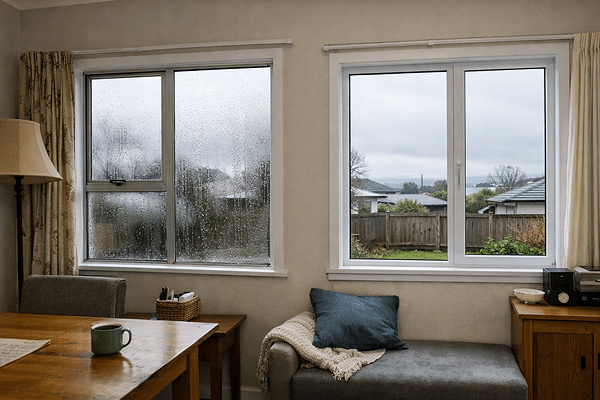
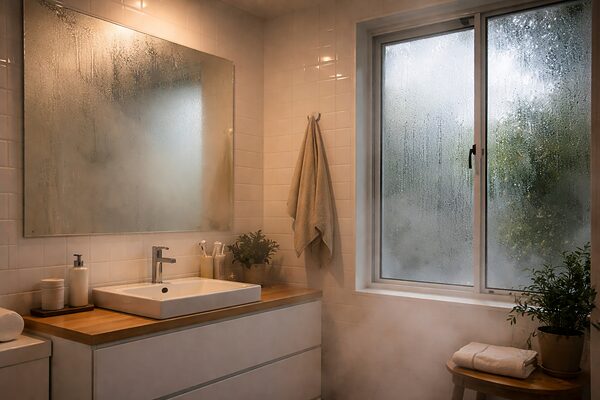
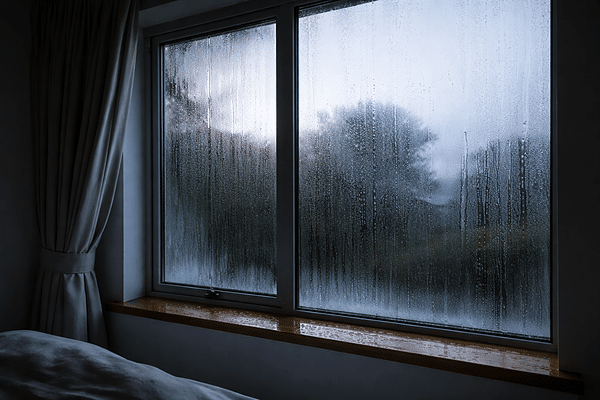
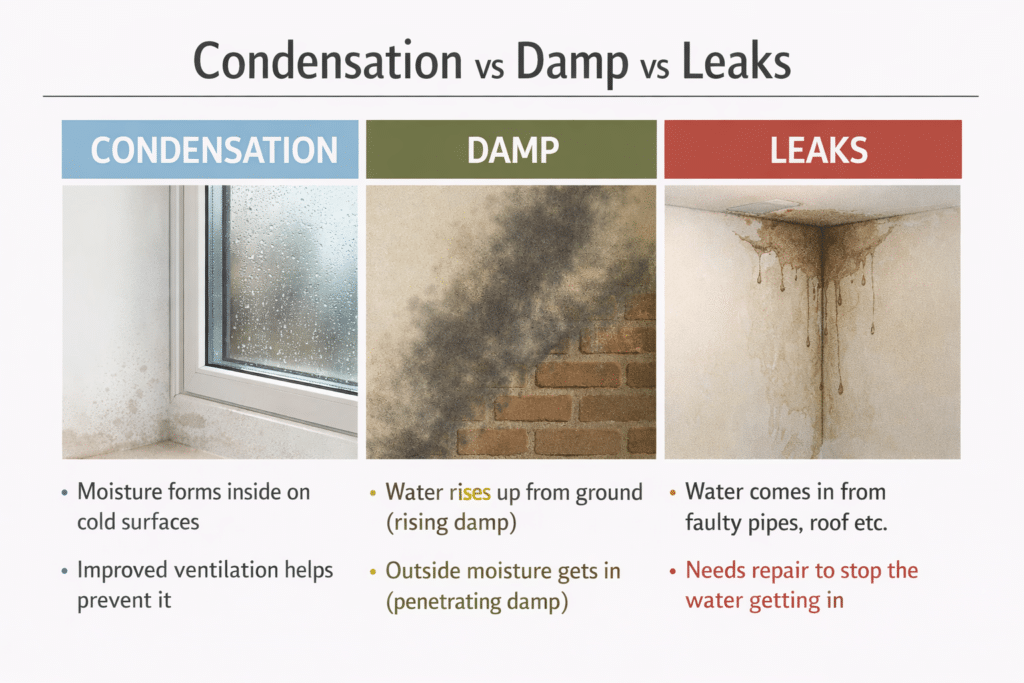
Condensation is by far the most common moisture problem in New Zealand homes. It happens when warm, moist air inside the house meets a cold surface, causing the moisture in the air to condense into water. You get droplets forming on windows, walls, and sometimes ceilings.
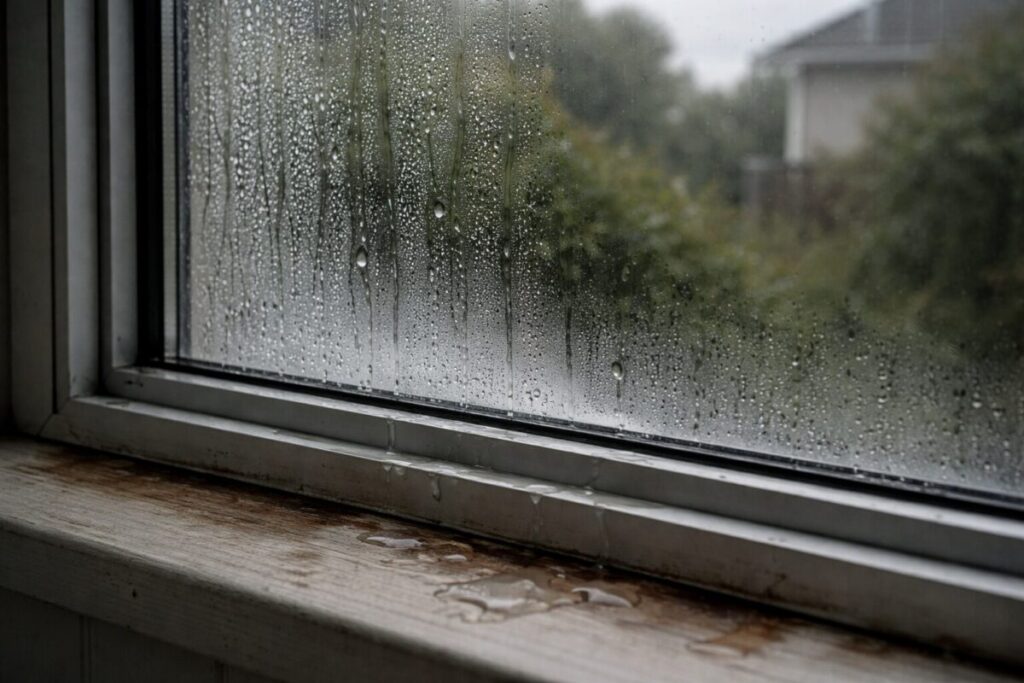
The telltale signs of condensation are pretty consistent:
- Water on the inside of windows in the morning, especially on single-glazed aluminium frames
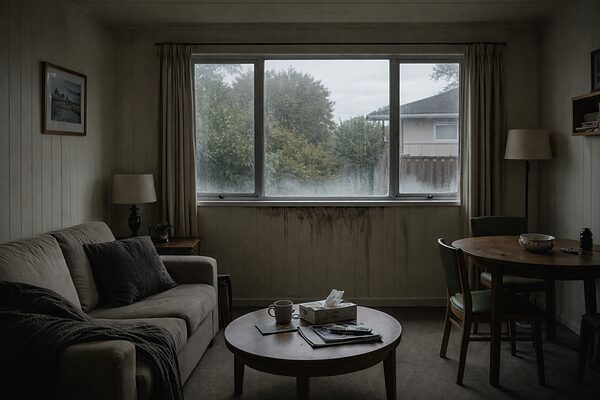
- Damp patches on exterior walls, usually in corners or behind furniture
- Mould forming on ceilings in rooms with poor airflow
- That musty smell that builds up through winter when the house stays closed up
The key giveaway with condensation is timing and pattern. It is worst in the morning, worst in winter, and worst in rooms where moisture is produced or where doors stay closed.
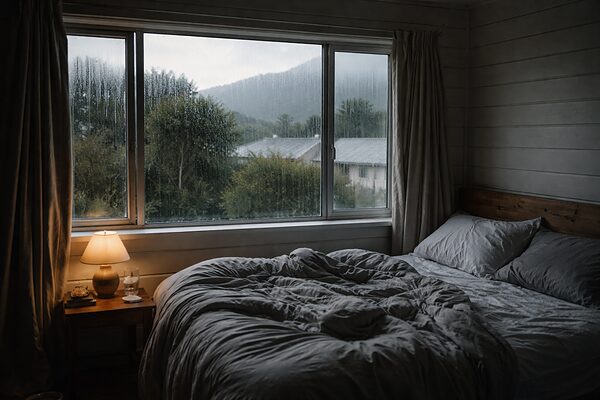
Bedrooms are a classic example: we sleep with the door shut, exhale moisture all night, and wake up to streaming windows and damp walls. Condensation is an indoor air problem, not a building fault. It is caused by too much moisture in the air and not enough ventilation to move it out.
What Rising Damp Looks Like
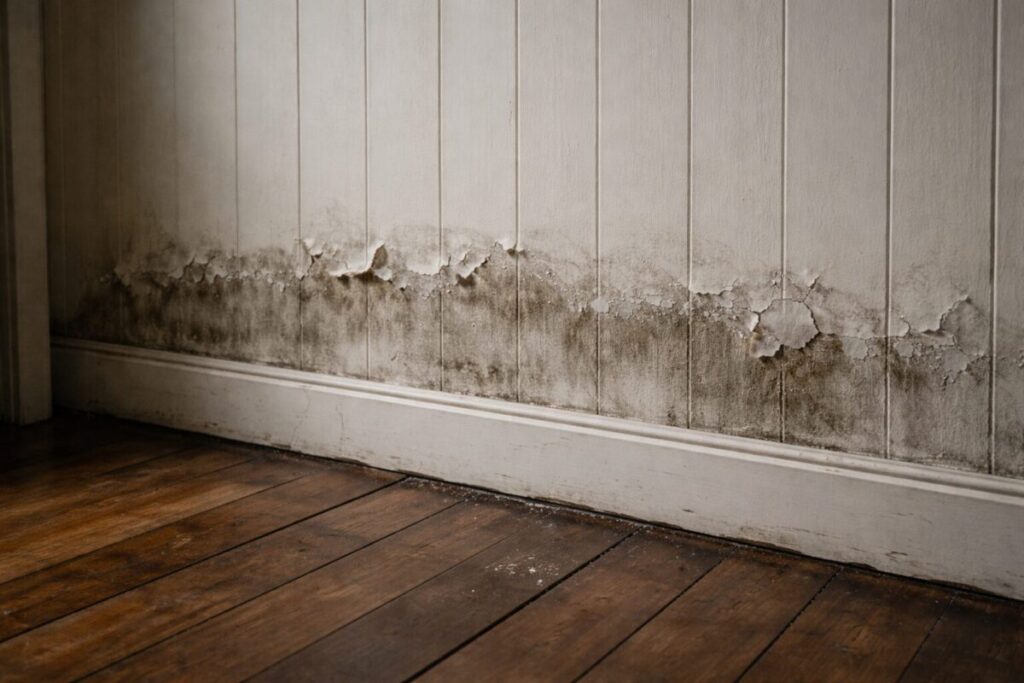
Rising damp is a very different beast. This is ground moisture being drawn up through the foundations and into the walls by capillary action, almost like a sponge soaking up water from below. It is a structural issue, not an air quality issue.
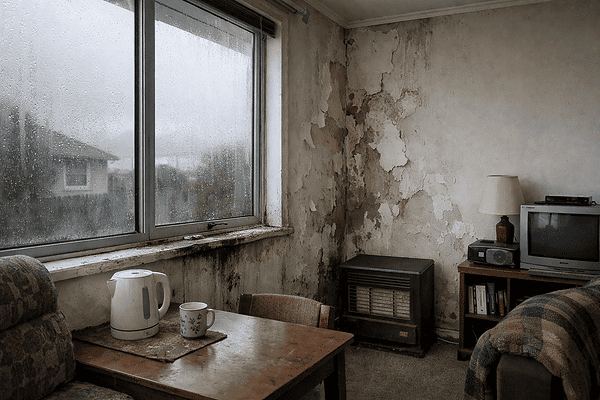
You will usually see rising damp as a tide mark on the lower section of interior walls, typically no higher than about a metre from the floor. The plaster or paint may bubble, flake, or feel soft to the touch, and you might notice salt deposits or white staining along the edge where the damp stops.
Rising damp tends to be constant. It does not come and go with the seasons the way condensation does. If the damp patch on your wall looks the same in summer as in winter and is concentrated in the lower portion of the wall, rising damp is a strong possibility.
In New Zealand, rising damp is most common in older homes built without a proper damp-proof course, which is the moisture barrier between the foundations and the walls. Many homes built before the 1950s either had no barrier at all or had one that had degraded over the decades.
What a Leak Looks Like
Leaks are the most straightforward of the three to understand, but they can be surprisingly tricky to track down. Water is getting into the house from outside through a failure in the building envelope, whether that is the roof, cladding, around a window, or damaged flashing.
The signs of a leak tend to be localised and often irregular. A brown stain on the ceiling that darkens after heavy rain, water dripping down a wall during a storm, damp patches that change shape depending on weather and wind direction. Unlike condensation, leaks usually show up in one specific area and worsen when it rains.
One thing I see a lot in New Zealand is leaks around older aluminium window frames where the sealant has broken down. Water gets behind the cladding and tracks down inside the wall, sometimes appearing well below the actual point of entry. That can make it look like rising damp when it is actually water ingress from higher up.
Quick Comparison: How to Tell Them Apart
This is the table I wish every homeowner had on their fridge. It covers the most reliable indicators for each type of moisture problem.
| Indicator | Condensation | Rising Damp | Leak |
|---|---|---|---|
| Location | Windows, exterior walls, ceilings, corners | Lower walls, up to ~1m from floor | Localised, often near roof, windows, or joins |
| Timing | Worse in morning, worse in winter | Constant year-round | Worse during or after rain |
| Pattern | Widespread, follows cold surfaces | Horizontal tide mark with salt deposits | Irregular stain, may shift with wind direction |
| Surface feel | Worse in the morning, worse in winter | Soft, crumbly plaster, may bubble | Wet patch, may drip actively in rain |
| Smell | Musty, stale air | Earthy, damp soil smell | Usually no distinct smell unless prolonged |
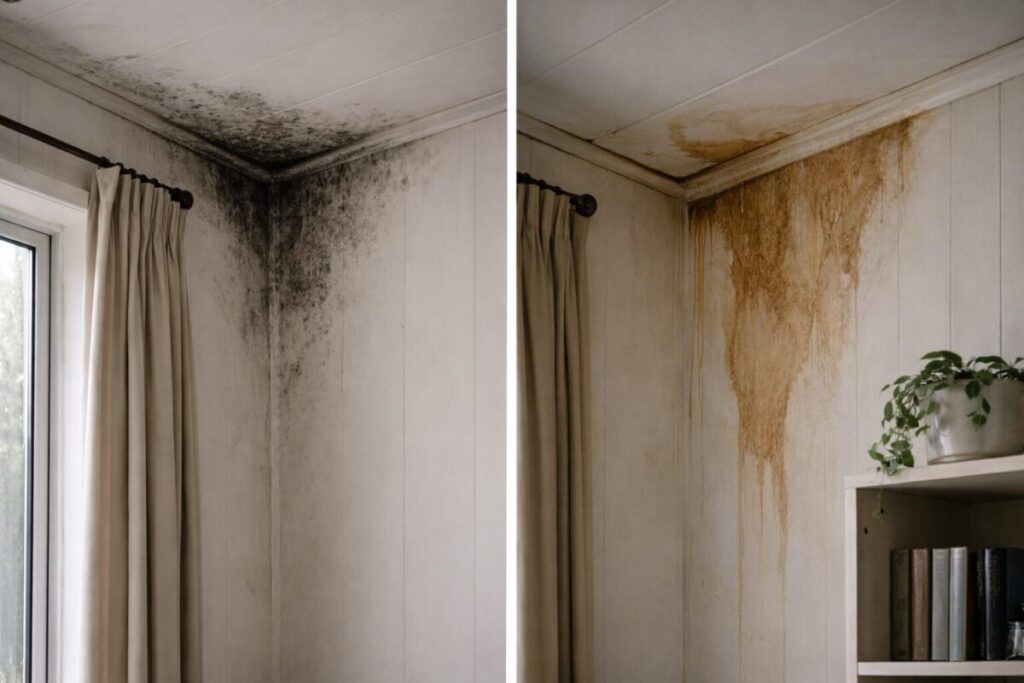
If you are seeing moisture on windows and upper walls that clears up by midday, that is almost certainly condensation.
If the lower part of a villa wall is permanently damp with white salt marks, that points to rising damp. And if a ceiling stain only appears when it rains, a leak is the most likely cause.
Why Getting This Right Matters
The reason this matters so much is cost. If you have a condensation problem and you call in a builder to waterproof your walls, you have spent money solving a problem you did not have. The condensation will remain because high indoor humidity and poor airflow have not been addressed.
I see this play out regularly. Someone repaints over mould, adds a waterproofing membrane to a wall, or replaces a window frame, and the moisture comes back within weeks. That is almost always a sign that the diagnosis was wrong.
Condensation in NZ homes is overwhelmingly the most common cause of indoor moisture, and it is also the cheapest to fix once you know that is what you are dealing with.
Condensation is addressed by improving airflow through the home, ensuring consistent heating, and reducing indoor moisture production. Rising damp needs a physical intervention at the foundation level.
A leak needs the point of water entry to be found and repaired. Three different problems, three different trades, three different budgets.
Frequently Asked Questions
Can condensation cause the same damage as a leak?
Over time, yes. Persistent condensation soaking into window frames, walls, and ceilings can cause paint to peel, timber to soften, and mould to establish. The damage happens more slowly than a leak, but if left unchecked the cumulative effect can be significant.
How do I know if my problem is condensation or a leak?
The simplest test is timing. If the moisture appears in the morning and clears by midday, or if it is worse in winter and better in summer, it is most likely condensation. If the moisture appears during or after rainfall and is concentrated in one area, a leak is more likely.
Should I get a builder or a ventilation specialist?
That depends on the diagnosis. If the moisture is condensation, a ventilation specialist can help. If it is a leak or structural damp, you need a builder or a weathertightness assessor. Getting the right person starts with correctly identifying the problem.
Is rising damp common in New Zealand?
It is more common in older homes, particularly those built before modern damp-proof courses were standard. Many NZ homes from the early to mid-twentieth century have some degree of rising damp, though it is often mild and limited to specific areas.