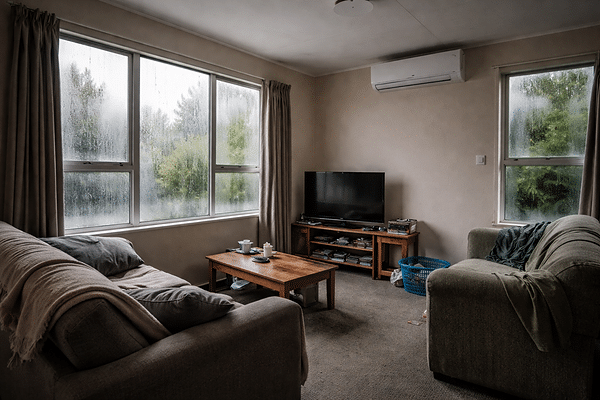
Condensation in NZ Rental Properties
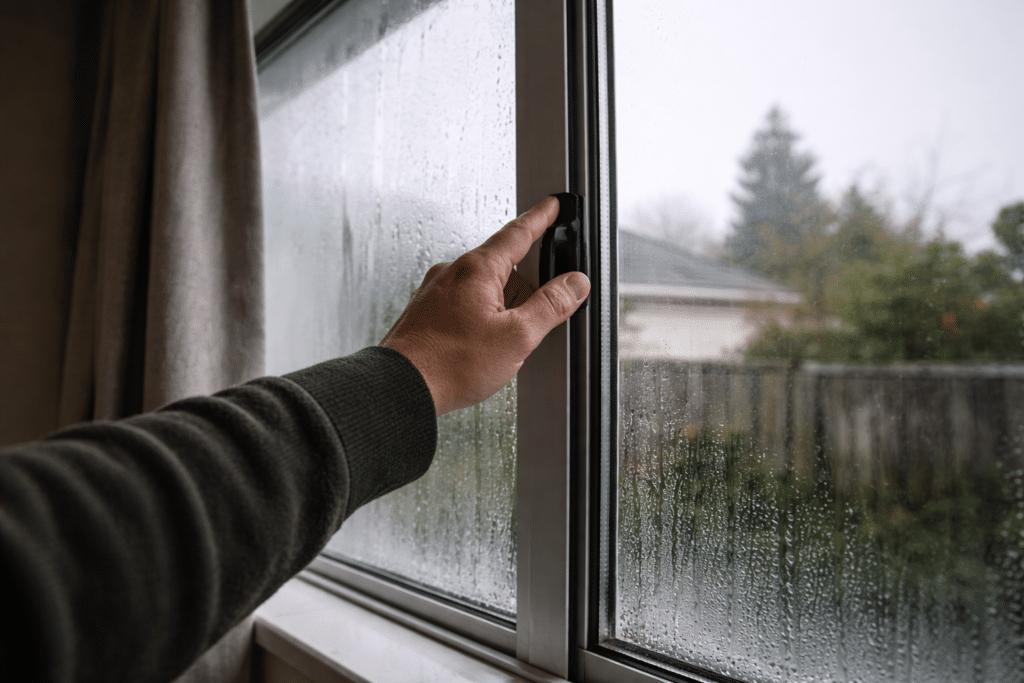
Rental properties get hit harder by condensation than almost any other type of home in New Zealand.
The building stock tends to be older, the insulation is often minimal, and the ventilation is rarely adequate for the number of people living in the house. It is a combination that makes condensation almost inevitable in winter.
After over a decade working in ventilation and moisture control across NZ homes, I have seen rental properties at every point on the spectrum.
The pattern is consistent; condensation in rentals is a shared problem that needs both the building and the occupants to work together to solve. Neither side alone can fix it completely.
Quick Summary
- Often, rental homes are more prone to condensation because they tend to be older, less insulated, and poorly ventilated
- Condensation in rentals is a shared issue; the building’s performance and the occupant’s habits both play a role. Mechanical ventilation is the comprehensive fix
- Single-glazed windows, uninsulated walls, and a lack of mechanical ventilation are the most common building-side factors
- Drying clothes indoors, not using extraction fans, and keeping doors closed overnight are the most common occupant-side factors
- The Healthy Homes Standards require landlords to provide heating, insulation, ventilation, moisture control, and draught stopping in rental properties
- Tenants can make a significant difference with simple daily habits, even before any building upgrades happen
- Most condensation in rental homes is fixable without major renovation if both sides take practical steps
Why Rentals Are Hit So Hard
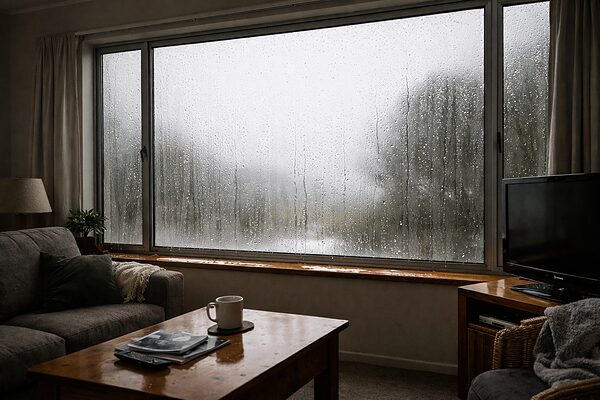
A large proportion of New Zealand’s rental housing stock was built before modern insulation and ventilation standards were in place.
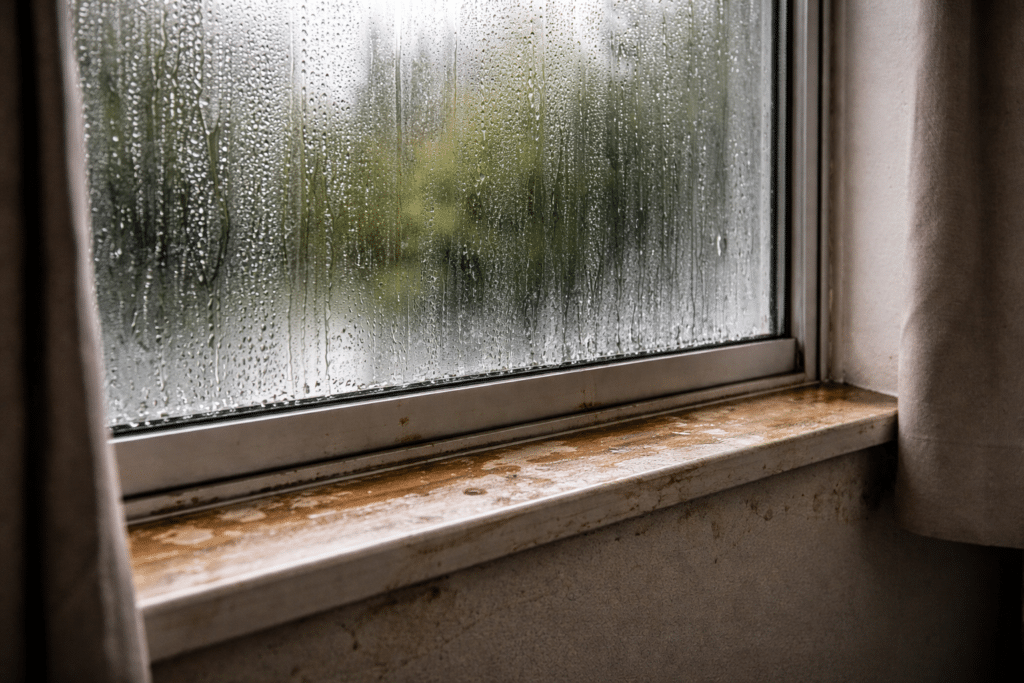
Many rental homes still have single-glazed aluminium windows, no wall insulation, and subfloor spaces that allow ground moisture to rise into the home. These are exactly the building characteristics that make condensation in NZ homes so widespread.
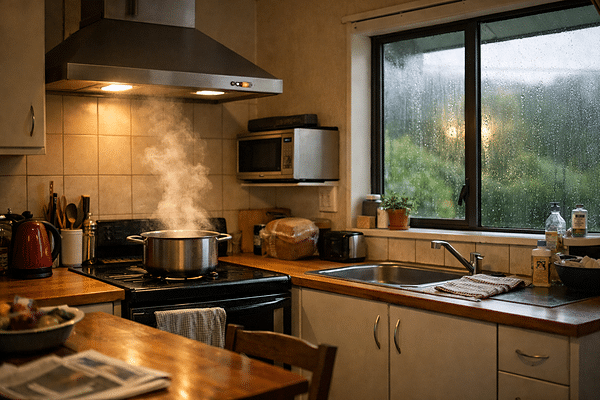
On top of the building issues, rental homes often have higher occupancy rates than their size would suggest. More people mean more moisture produced from breathing, showering, and cooking. When that extra moisture meets a building that cannot manage it, condensation ramps up quickly.
There is also a behavioural factor I consistently see. Tenants in rentals are sometimes reluctant to run the heating because of the power cost, which means surfaces stay cold and the conditions for condensation remain all day and night. That reluctance is understandable, but it does contribute to the problem.
The Building Side: the Property
Some condensation problems in rentals cannot be solved solely by tenant habits. If the building itself does not have the basics in place, the moisture balance will always tip in the wrong direction, regardless of what the occupants do.
Ventilation
This is the single biggest gap I see in rental properties. Many rentals have no mechanical ventilation at all, relying entirely on opening windows, which tenants understandably avoid in winter because it lets the warmth out.
When looking after an investment, sometimes it’s worth considering options.
A whole-house ventilation system that runs automatically makes a significant difference because it keeps air moving and humidity down without requiring the occupant to remember or take action.
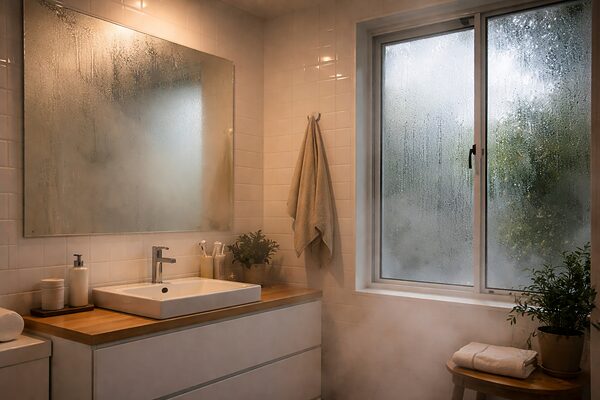
At a minimum, bathrooms and kitchens need working extractor fans that actually move enough air. I regularly find bathroom fans in rentals that are barely functional, clogged with dust, or ducted poorly so the moist air just gets dumped into the roof cavity rather than outside.
Insulation
Under the Healthy Homes Standards, ceiling and underfloor insulation is now required in rental properties. That helps, but many rentals still have uninsulated walls, which means exterior wall surfaces remain cold and continue to attract condensation even after ceiling and floor insulation has been added.
Heating
Heat pumps are the most common choice, and they work well for condensation because they warm the air without adding moisture. The key is that the heating needs to be used consistently to keep surfaces warm enough to prevent moisture from settling.
Windows and Glazing
Single-glazed aluminium windows are still the norm in many rental properties, and they are the biggest condensation surface in the home. Upgrading to double glazing makes a measurable difference, but it is a significant investment.
In the meantime, even simple measures like ensuring window hardware works so tenants can open them, and fitting trickle vents where practical, help improve airflow.
The Occupant Side: What Tenants Can Do
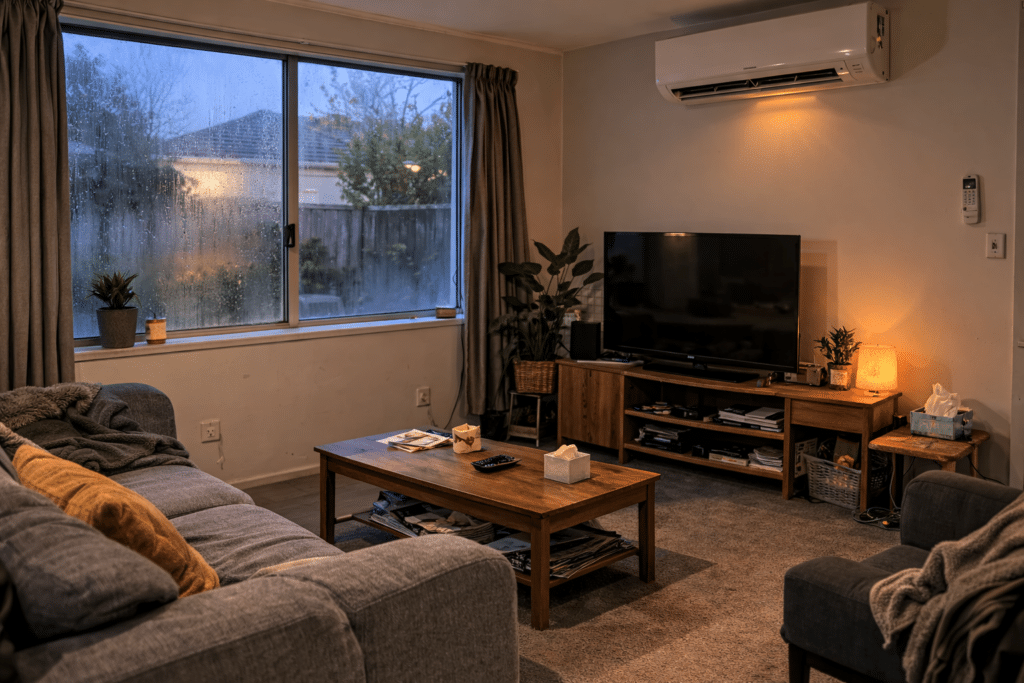
Even in a rental with building-side limitations, tenant habits can significantly affect how much condensation forms. These are the changes that consistently make a difference.
- Use the extractor fan every time you shower, and leave it running for at least 15 minutes after you finish
- Keep the bathroom door closed during and after showering so moisture does not drift into bedrooms and hallways
- Avoid drying clothes indoors whenever possible. A single load of washing on an indoor rack can add up to 5 litres of moisture to the air
- Open windows briefly in the morning to flush out overnight humidity; even 10 to 15 minutes makes a difference
- Use the heating provided, even on a low setting, to keep surfaces warmer and reduce condensation forming overnight
- Leave bedroom doors slightly ajar at night so air can circulate rather than trapping moisture in a sealed room
- Pull wardrobes and furniture away from exterior walls by at least 50mm to prevent hidden damp zones
These habits are free or very low-cost, and I have seen them make a visible difference within days in homes where bedroom condensation was heavy every morning.
Shared Responsibility Question
One can encourage, but not control, a tenant’s behaviours.
One of the most common tensions around rental condensation is the question of who is responsible.
The reality is that it is almost always a combination of building factors and occupant factors, and neither side can fully solve it alone.
I have worked on rental properties where the landlord did everything right on the building side and the tenant’s habits still produced heavy condensation, and I have seen the reverse just as often.
| Factor | Landlord Responsibility | Tenant Responsibility |
|---|---|---|
| Insulation | Provide compliant ceiling and underfloor insulation | Do not block or remove insulation |
| Heating | Provide a fixed heating device in the main living area | Use the heating consistently |
| Ventilation | Provide working extraction and ventilation | Use extractor fans and open windows when practical |
| Moisture control | Ensure subfloor moisture is managed | Reduce indoor moisture from cooking, showering, and drying clothes |
| Maintenance | Keep the building envelope weathertight | Report leaks or maintenance issues promptly |
When both sides play their part, condensation in most rentals can be brought to a manageable level. When only one side acts, the improvement is partial, and the frustration tends to continue.
Frequently Asked Questions
Is my landlord responsible for condensation in my rental?
The landlord is responsible for providing a building that meets certain standards, including insulation, heating, ventilation (manual or continuous), moisture control, and draught stopping. They are not responsible for how the tenant uses the home day to day. Condensation is usually a combination of building performance and occupant habits.
Can I stop condensation in a rental without the landlord doing anything?
An effect can be had by consistent habits, using extraction fans, manually ventilating rooms, drying clothes outside, and using the heating provided. However, if the building has poor insulation, no ventilation system, or single glazing, there are limits to what habits alone can achieve.
Should I report condensation to my landlord or property manager?
Yes, especially if you are seeing persistent mould, peeling paint from moisture damage, or signs of water entry that go beyond normal condensation.
Will a dehumidifier solve condensation in my rental?
A dehumidifier helps by pulling moisture from the air, but it works best as a supplement to proper ventilation and heating, not as a replacement. In a rental with no mechanical ventilation and poor insulation, a dehumidifier alone will struggle to keep up with the moisture being produced.