Why NZ Homes Get Dampness or Mould Issues
Dampness and mould are more common in New Zealand homes than most people realise. It is not limited to old houses or poorly maintained rentals; it shows up in new builds, well-kept family homes, and everything in between. The pattern is remarkably consistent across the country.
After spending time in ventilation, heat pumps, energy auditing, and building performance in New Zealand and overseas, I have come to see dampness and mould as symptoms rather than standalone problems.
Understanding how the house handles moisture, heat, and airflow, and the drivers behind them, can make the issue much clearer.
Quick Summary
- New Zealand’s housing stock, climate, and daily living habits combine to make dampness and mould very common across our country
- Most dampness problems come from indoor moisture that has no way to escape, not from external water getting in
- Older homes with single glazing, no wall insulation, and poor subfloor ventilation are most vulnerable
- New builds can also develop issues when airtight construction traps moisture produced by everyday activities
- Cooking, showering, drying clothes indoors, and breathing all add significant moisture to indoor air
- Mould needs moisture and a surface to grow on, so controlling indoor humidity is the most effective prevention
- Improving ventilation, maintaining consistent heating, and reducing moisture at the source are the three practical levers
The NZ Climate Factor
New Zealand lies in a maritime climate zone, which means relatively high humidity year-round, mild but damp winters, and frequent rainfall across most regions.
The air outside often already carries a fair amount of moisture, and when that combines with moisture produced inside the home, indoor humidity can climb quickly.
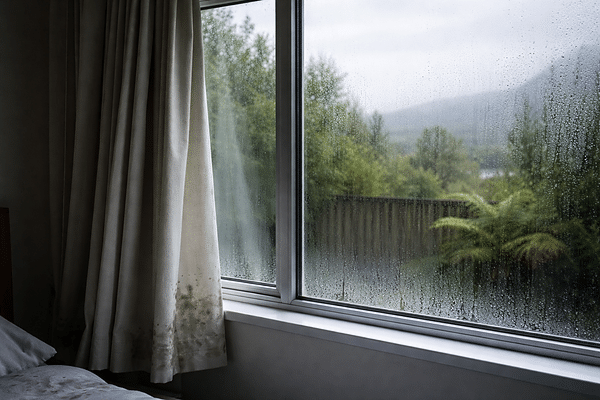
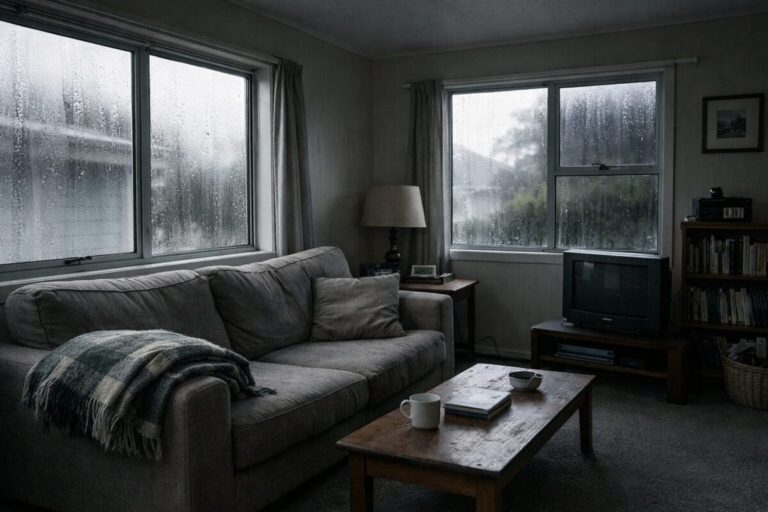
Winter is when things tip over. Outdoor temperatures drop, homes get sealed up to retain warmth, and the temperature gap between indoor air and cold surfaces grows wide enough for condensation to form.
That cycle of moisture settling on walls, windows, and ceilings creates the damp conditions that mould needs to establish and spread.
Different parts of the country experience this at different intensities. Coastal areas and regions with high rainfall tend to carry higher ambient humidity, while inland areas with colder winters see sharper temperature drops that trigger condensation more aggressively.
The moisture patterns vary quite a bit by region, but the underlying mechanics are the same everywhere.
How the Housing Stock Makes It Worse
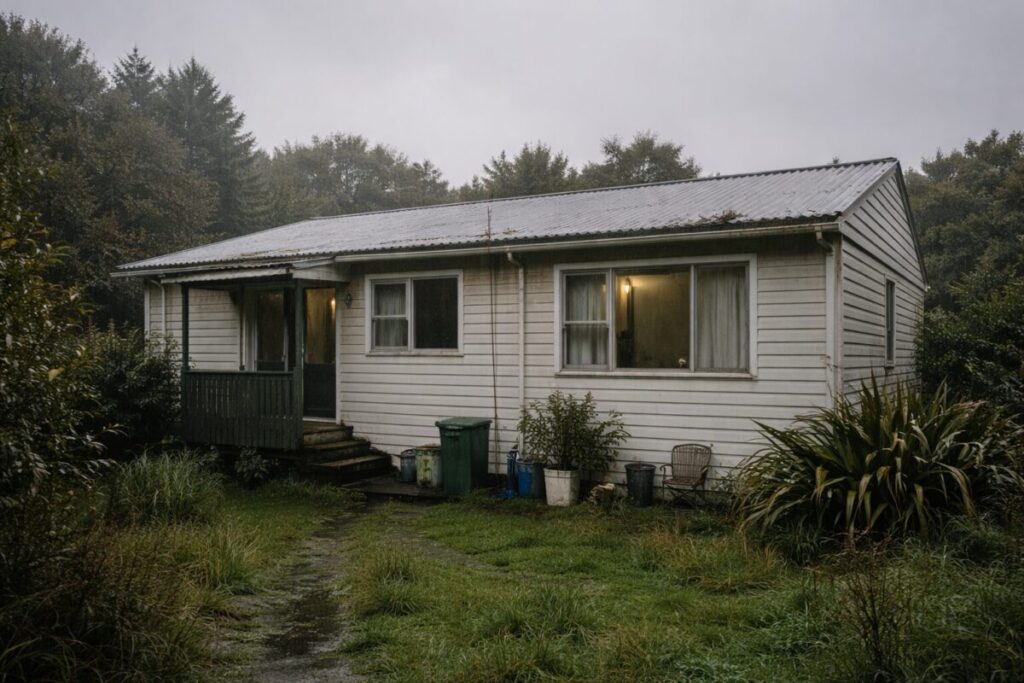
A large portion of New Zealand’s housing stock was built before modern insulation and ventilation standards were in place. Many homes from the early to mid-twentieth century still have features that make moisture problems more likely, such as:
- no wall insulation
- single-glazed aluminium windows
- minimal subfloor protection
- timber framing that absorbs and holds moisture readily
These homes were originally designed to breathe through gaps and draughts, which helped air circulate and reduced moisture build-up.
Over time, many of those gaps have been sealed for comfort and energy efficiency, but no replacement ventilation has been added. This creates a home that traps moisture far more easily than it was originally designed to.
Older homes are particularly prone because every exterior surface runs cold in winter. Walls, windows, and ceilings all become condensation targets, and the lack of insulation means there is very little thermal barrier between inside and outside.
Even homes that have had ceiling insulation retrofitted often still have uninsulated walls, where much of the hidden dampness accumulates.
New Builds Are Not Immune
Modern homes are built tighter and better insulated, which is great for energy efficiency, but creates a different moisture challenge.
Airtight construction means moisture produced inside the home does not leak out through gaps, as it does in older houses. If ventilation is not adequate, humidity builds up, and condensation can appear even in homes that are only a year or two old.
I see this regularly with families who move from a draughty older place into a brand-new home and are surprised to find fogged windows and damp patches within the first winter. The habits that worked in an old house do not transfer to an airtight one. We as humans are always producing moisture in the home!
Where the Moisture Actually Comes From
One of the biggest misconceptions is that dampness means water is entering from the outside. In the vast majority of cases I see, the moisture is being generated inside the home by normal daily activities. The volumes are surprisingly high.
| Daily Activity | Approximate Moisture Added |
|---|---|
| Showering (per person) | 1 to 1.5 litres |
| Cooking (gas hob, no lids) | Up to 3 litres |
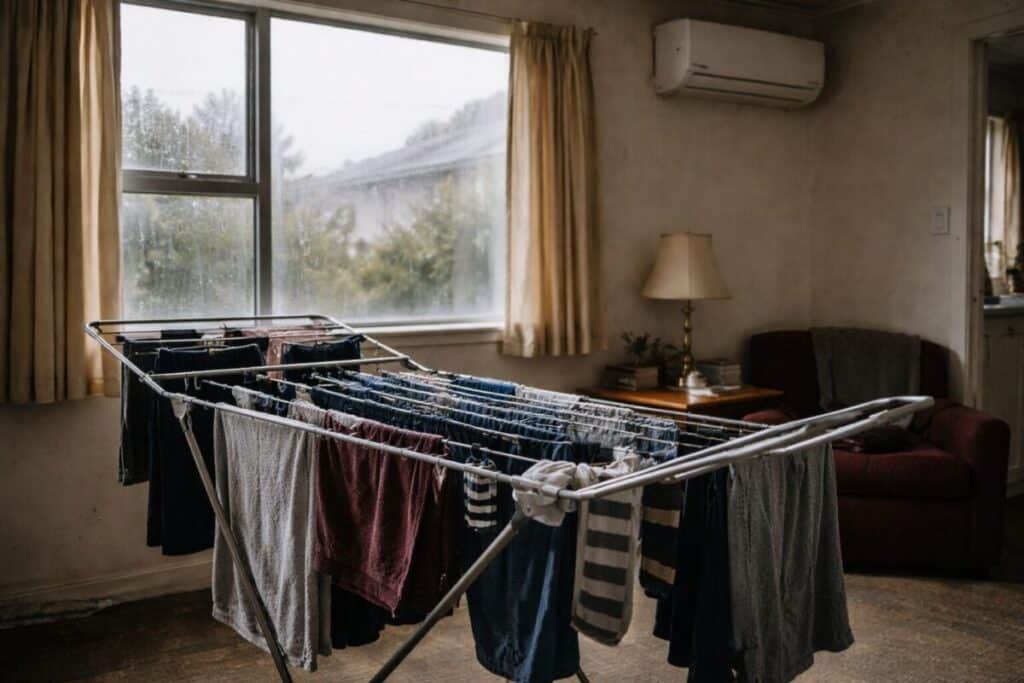
| Drying one load of washing indoors | Up to 5 litres |
| Breathing (family of four, overnight) | 1 to 1.5 litres |
| Unflued gas heater (3 hours) | Up to 3 litres |
A typical household can easily add 10 to 15 litres of moisture to the indoor air on a winter day. If that moisture has no exit path, it saturates the air and begins to settle on any surface cold enough to trigger condensation. That persistent dampness is exactly what mould needs to take hold.
A lot of people confuse condensation with actual dampness or leaks, but the fix for each is completely different, so getting the source right is the essential first step.
Why Mould Takes Hold
Mould is not random. It needs three things to grow: moisture, a surface to attach to, and time. In a home where indoor humidity remains high and air does not move, mould will find a place to establish.
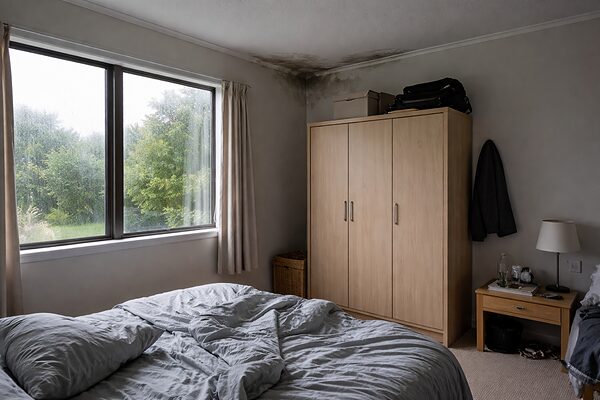
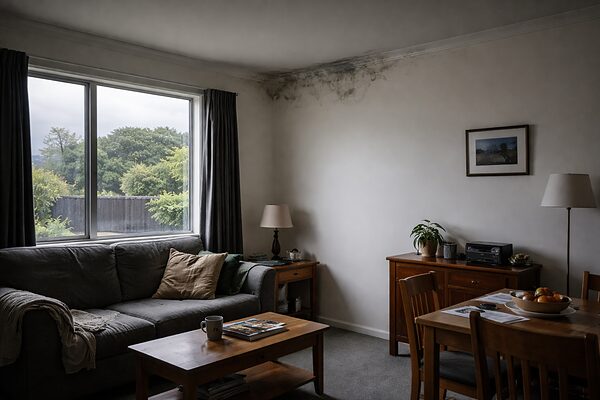
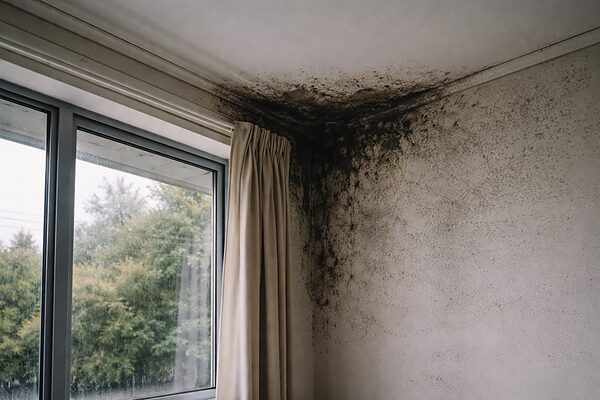
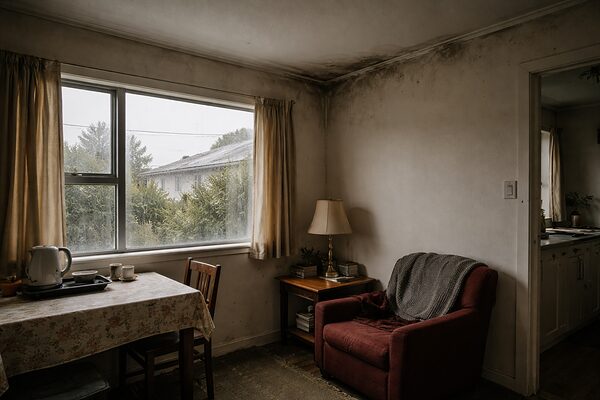
The usual spots are corners of exterior walls, behind furniture that sits against cold walls, on ceilings where warm moist air rises and meets a cold surface, and around window frames where condensation pools repeatedly.
Without effective bathroom extraction fan ducting, it’s often an issue also.
The key thing to understand is that cleaning mould off a surface does not solve the problem if the conditions that created it remain. It will come back, often within weeks.
The only lasting solution is to change the environment so that moisture does not accumulate in the first place.
The Three Practical Levers
Every dampness and mould issue I have worked on comes back to the same three factors. Getting even one of them right usually makes a visible difference, and addressing all three is what delivers lasting results.
Ventilation
Moving moist air out and bringing drier air in is the most impactful change for most homes. A whole-house ventilation system does this automatically and continuously, which is particularly useful in homes that are sealed up through winter.
Even simple steps like opening windows briefly each morning, running bathroom extractor fans for 15 minutes after showers, and keeping internal doors slightly ajar to allow air circulation can noticeably lower indoor humidity.
Consistent Heating
Cold surfaces are where moisture settles. Keeping the home at a steady, moderate temperature reduces the number of cold surfaces available and raises the threshold before condensation forms.
A heat pump running consistently at 18 degrees is far more effective than heating hard for an hour and switching off, because the goal is to prevent surfaces from dropping to the dew point rather than warming the room briefly.
Reducing Moisture at the Source
Every litre of moisture you prevent from entering the air is a litre that cannot end up on your walls or windows.
Using lids when cooking, running extraction fans properly, drying clothes outside or in a vented space, and avoiding unflued gas heaters all reduce the total moisture load inside the home.
These are free or low-cost changes that compound over time.
Frequently Asked Questions
Is dampness the same as condensation?
Not exactly. Condensation is one specific cause of dampness, where moisture in the air settles on cold surfaces. Dampness can also come from rising damp through foundations or water ingress from outside. The fix depends entirely on the source, which is why getting the diagnosis right matters.
Why does mould keep coming back after I clean it?
Because cleaning removes the mould but not the conditions that created it. If humidity stays high and airflow stays poor, the moisture will return and mould will re-establish in the same spots. Lasting results require changing the moisture balance in the home.
Are some rooms worse than others for dampness?
Yes. Bathrooms, kitchens, and bedrooms tend to be the worst. Bathrooms and kitchens produce large amounts of moisture directly, while bedrooms trap moisture overnight when doors are closed and occupants are breathing for eight hours in an enclosed space.
Will a dehumidifier solve my mould problem?
A dehumidifier can help manage symptoms by pulling moisture from the air, but it does not address the root cause, which is usually inadequate ventilation. It works best as a supplement to proper airflow and source control, not as a standalone solution.