Why Mould Keeps Coming Back
This is the conversation I have more than almost any other. Someone has scrubbed the mould off a wall or ceiling, maybe even repainted over it on the windows, and within a few weeks the dark patches are creeping back in the exact same spots. It is frustrating, and it makes people feel like they are doing something wrong.
They are not.
Having worked in energy auditing, ventilation, and moisture control across NZ and internationally, I can tell you that mould returning after cleaning is one of the most predictable outcomes in homes where the underlying conditions have not changed.
The mould is not the problem. It is the symptom. And until you fix what is feeding it, it will keep coming back.
Quick Summary
- Mould returns because cleaning removes the visible growth, but not the conditions that caused it
- The three things mould needs are moisture, a surface to grow on, and time, and all three are present in most NZ homes during winter
- Painting over mould without fixing the moisture issue is one of the most common mistakes and the mould will grow through the new paint
- Mould tends to return in the same spots because those locations have the coldest surfaces and the least airflow
- Reducing indoor humidity, improving ventilation, and maintaining consistent heating are the three changes that actually stop the cycle, opening windows daily can help for instance
- A home that has had mould once will get it again unless the moisture balance changes
- Most recurring mould in NZ homes is driven by condensation, not leaks or rising damp
The Recurrence Cycle Explained
Mould is a living organism that grows wherever it finds moisture and a surface to attach to. When you clean mould off a wall, you remove the visible growth, but you do not change the environment that allowed it to establish in the first place.
If the wall is still cold, the air in that room is still humid, and there is still no airflow moving moisture away from that surface, the conditions for regrowth are identical to those that caused the original problem.
Mould spores are always present in the air, so the moment the surface gets damp again, new growth begins. In most homes I visit, mould returns within 2 to 6 weeks of cleaning.
This is not a cleaning failure. It is a moisture management failure, and the distinction matters because it changes where you focus your effort and your money.
Why Does It Always Comes Back in the Same Spots
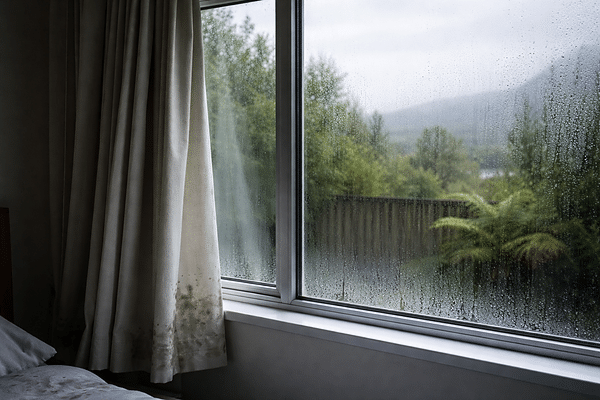
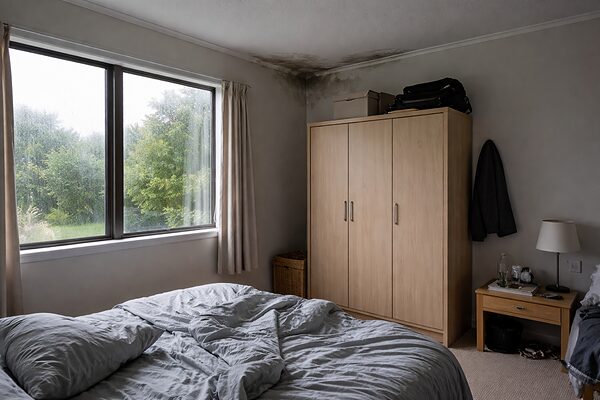
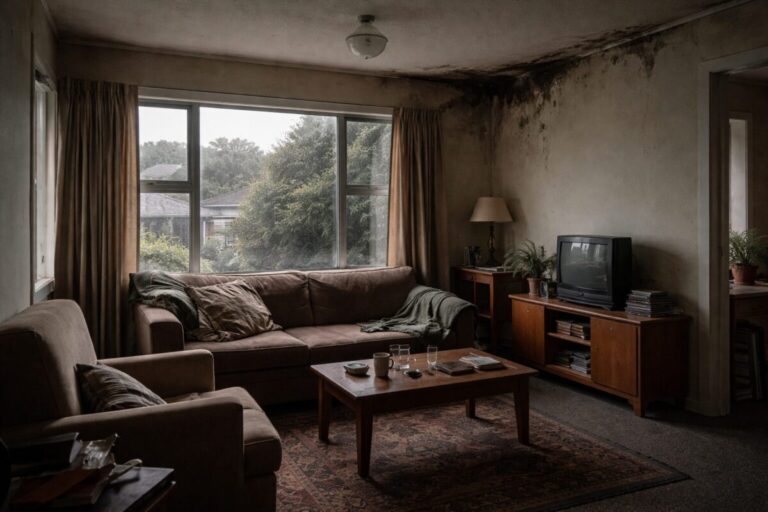
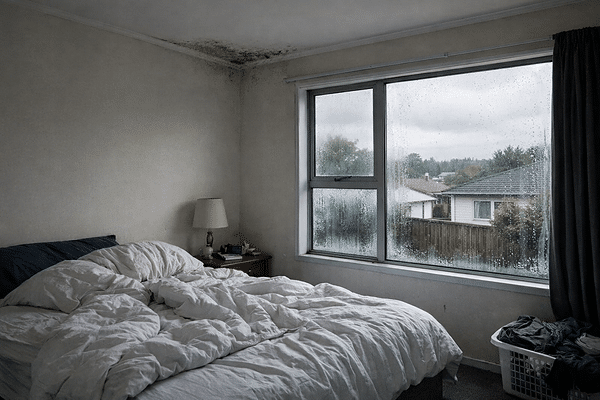
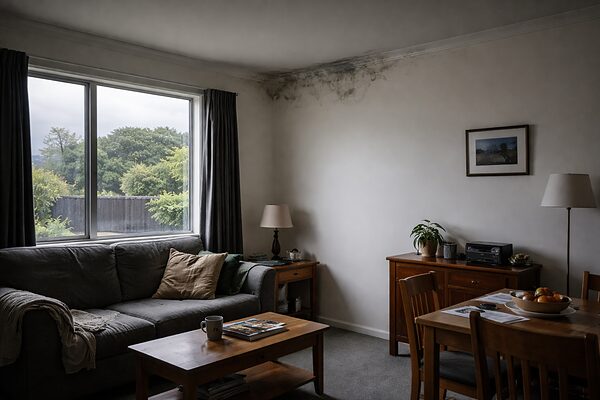
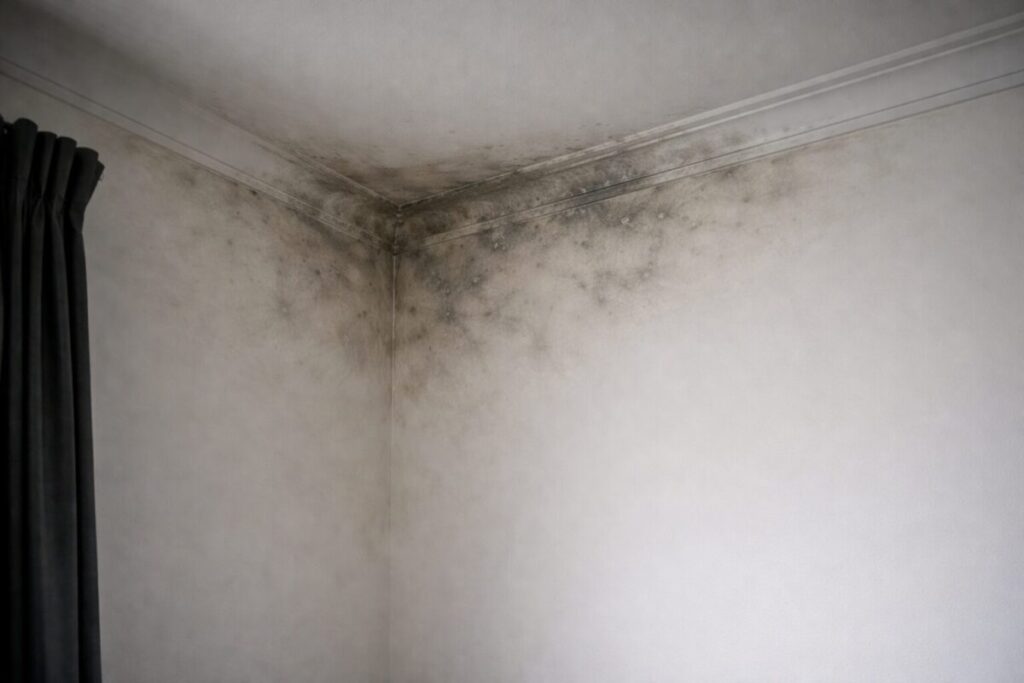
People often notice that mould returns in exactly the same locations every time. Upper wall corners, behind wardrobes, around window frames, on ceilings where airflow is weakest.
That is not a coincidence. Those spots are the coldest surfaces in the room, so they are the first places where moisture in the air condenses and settles.
A corner where two exterior walls meet creates a thermal bridge, a point where cold transfers through the building structure more efficiently than the surrounding wall. That corner will always be colder than the flat wall surfaces on either side, so it will always attract condensation first.
Unless you change the temperature of that surface or reduce the moisture in the air around it, mould will keep targeting that same spot year after year.
The same logic applies to furniture placed against exterior walls. The furniture blocks both warmth and airflow from reaching the wall surface, creating a hidden cold zone where moisture accumulates unnoticed.
I regularly find mould behind bedroom furniture that the homeowner had no idea was there until they moved a wardrobe or a headboard.
Common Mistakes That Guarantee Mould Returns
There are a few patterns I see repeatedly in homes where mould keeps coming back. Each one feels like a reasonable response to the problem, but none of them addresses the root cause.
Painting Over Mould
This is the most common mistake by a wide margin. Homeowners see mould on a wall, give it a quick wipe, and paint over the top.
The wall looks clean for a few weeks, but the mould is still alive beneath the paint surface, and because the moisture that feeds it has not changed, it grows straight through the new coat.
Within a month or two, you can see the dark patches emerging again, sometimes worse than before because the paint has sealed moisture against the wall.
Cleaning Without Ventilating
Scrubbing mould with bleach or vinegar removes what is visible, but if the room still has poor airflow and high humidity, the clean surface is just a fresh canvas.
I see this a lot in bathrooms without working extraction and in bedrooms where the door stays shut all night. The cleaning effort is real, but the conditions have not changed at all.
Relying on a Dehumidifier Alone
A dehumidifier pulls moisture from the air, which helps, but it does not move air through the home or address the specific cold surfaces where condensation forms.
In a closed bedroom overnight, a dehumidifier running in the hallway does nothing for the moisture building up on the bedroom walls. It is a useful supplement, but it is not a standalone fix for recurring mould.
What the Mould Is Actually Telling You
Recurring mould is useful information if you read it correctly. It is telling you exactly where the moisture problem is, how severe it is, and whether the conditions are getting better or worse over time.
| What You See | What It Means |
|---|---|
| Mould returns within 2-4 weeks after cleaning | The moisture source is strong and constant |
| Mould returns seasonally, mainly in winter | Condensation-driven, likely linked to cold surfaces and reduced ventilation |
| Mould only in one room | Localised airflow or moisture issue in that specific space |
| Mould spreading to new areas over time | Overall indoor humidity is rising or ventilation is deteriorating |
| Mould appears after cleaning and repainting | Root structure was not fully removed, and moisture conditions unchanged |
Most recurring mould in NZ homes is driven by condensation from high indoor humidity rather than leaks or rising damp. That is actually good news because condensation is the most fixable of the three.
How to Actually Stop the Cycle
Breaking the mould recurrence cycle requires changing the conditions, not just treating the surface. There are three things that consistently work.
Get Air Moving
This is the single biggest lever. Moist, still air sitting against a cold surface is the recipe for mould. Moving that air, even gently, breaks the cycle.
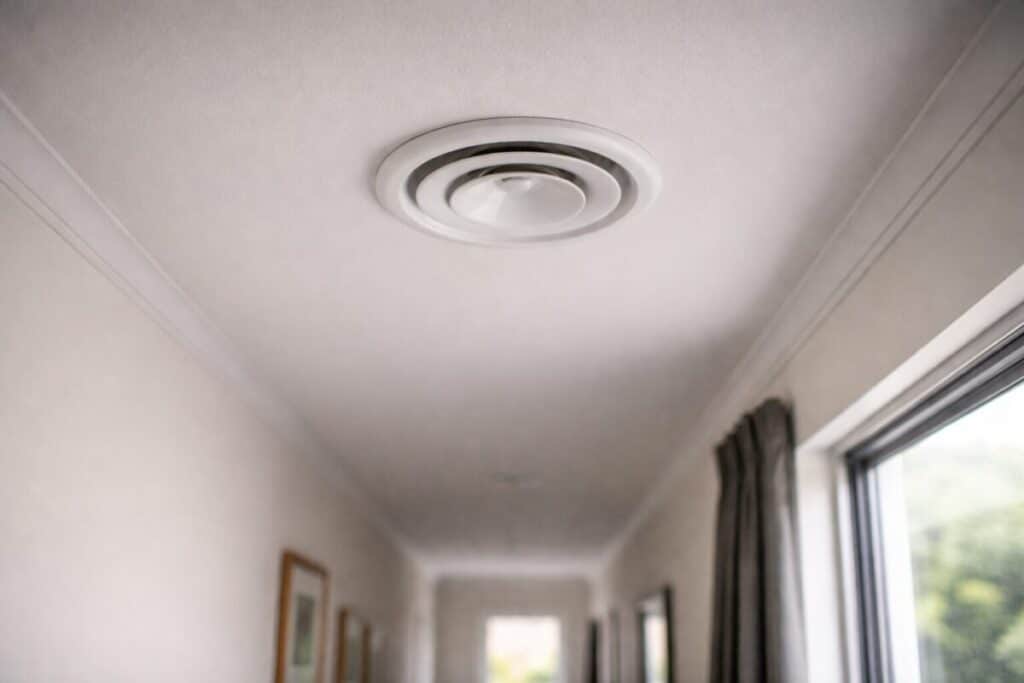
A whole-house ventilation system does this continuously by pushing drier filtered air through every room, but even simple changes like keeping doors slightly ajar, running bathroom extraction properly, and opening windows briefly each morning make a measurable difference.
Keep Surfaces Warmer
Condensation forms on cold surfaces. If you can keep walls, windows, and ceilings slightly warmer, you reduce the number of places where moisture can settle.
Consistent, low-level heating through the evening and overnight is far more effective than short bursts. The aim is not to make the house hot, just to prevent surfaces from dropping to the dew point where moisture condenses.
Reduce the Moisture Going In
Every litre of moisture you stop from entering the air is a litre that cannot end up on your walls. Use lids when cooking, run extraction fans during and after showers, dry clothes outside or in a vented space, and avoid unflued gas heaters that pump moisture directly into the air.
These are free or low-cost changes, and in combination, they significantly shift the dampness balance inside the home.
Frequently Asked Questions
How quickly can mould come back after cleaning?
In homes where humidity stays high and airflow is poor, mould can start regrowing within days and become visible again within two to four weeks. The speed of return is a good indicator of how severe the underlying moisture issue is.
Will anti-mould paint stop it from returning?
Anti-mould paint contains additives that slow mould growth on the paint surface, which can help in mild cases. It will not prevent mould from returning if indoor humidity remains high, because the moisture conditions overpower the paint's resistance over time.
Is recurring mould always caused by condensation?
In most NZ homes, yes. Condensation is overwhelmingly the most common driver of indoor mould. However, recurring mould in specific locations can sometimes be caused by a slow leak or rising damp. If the mould does not follow typical condensation patterns, it is worth investigating further.
Can I stop mould from coming back without spending a lot of money?
Many of the most effective changes cost nothing. Keeping doors ajar, running extractor fans properly, drying clothes outside, wiping condensation off windows in the morning, and avoiding unflued gas heaters all reduce the moisture that feeds mould. These habit changes alone can make a significant difference.